Japan Cycling Guide
It is difficult, dare we say self-defeating, to speak in generalities about cycling in Japan, because Japan is a diverse archipelago-nation. There are more than 14,000 islands, of which 260 are inhabited.
From the far-northern spray of the Kuril Islands to the subtropical volcanic landmasses in the south and the far-flung Yaeyama and Tsushima islands, which sit closer to Taiwan and South Korea, respectively, than they do to Tokyo.
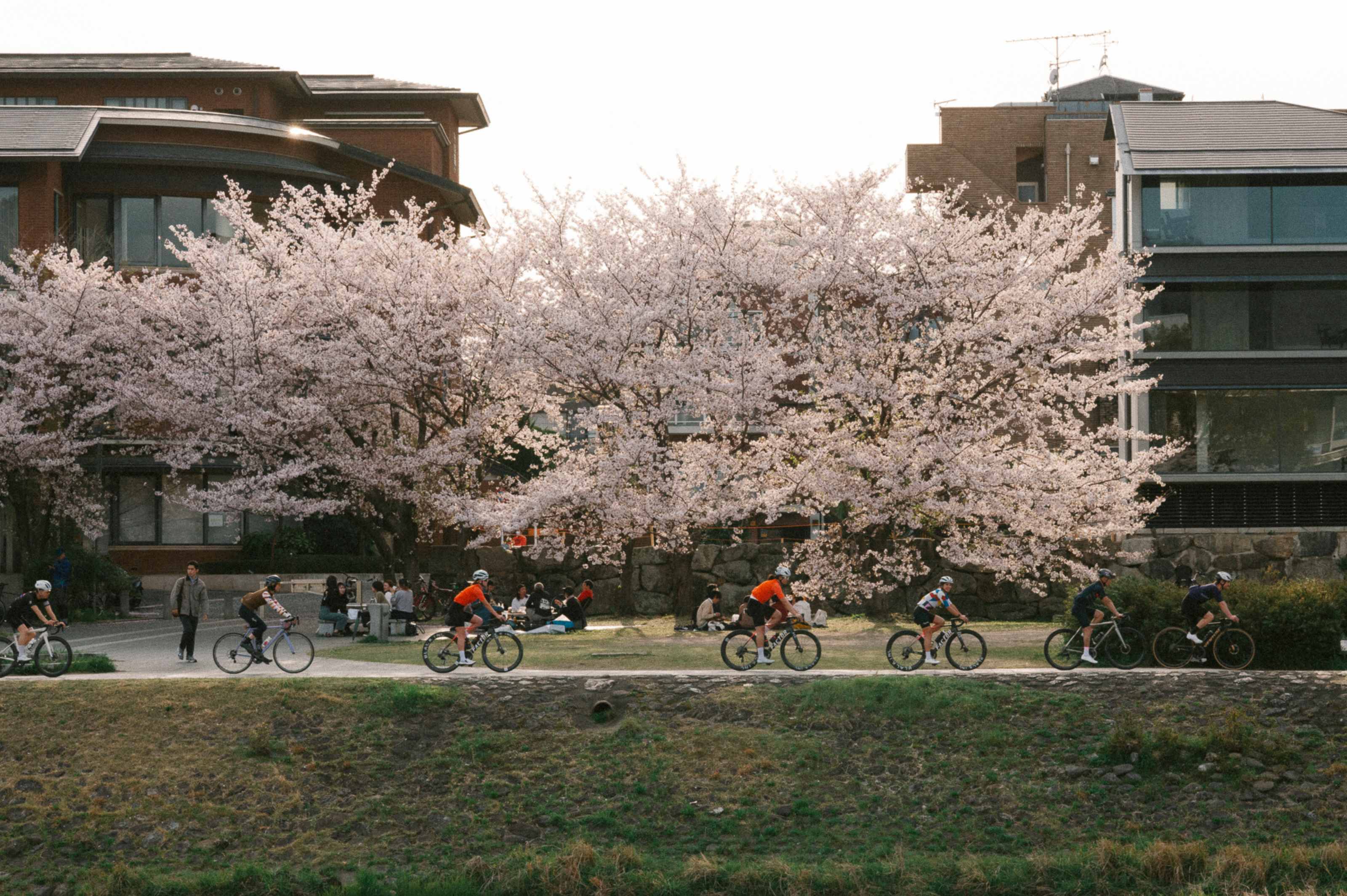
Of the 260 islands, there are four that house the majority of the country’s population. Honshu is the largest in the archipelago. It is the location of most of Japan’s largest cities and boasts a great diversity of cycling terrain, from high mountains to vast flatlands.
To the north, the wild and rugged Hokkaido is prone to snow and harsh winters – it boasts a thriving metropolis in the form of Sapporo, as well as hundreds of kilometres of largely-empty tarmac and gravel to explore.
Kyushu is the southernmost major island and was the first to see interaction with the wider world; for many years its port city Nagasaki was the only one that traded with merchants from the West. Kyushu is volcanic and its climate subtropical, a true contrast with chilly Hokkaido.
Last and (if only by size) least, Shikoku. Sheltered by the gentle curve of southern Honshu, the climate of Shikoku is milder than Kyushu but still subtropical. It is often characterised as being more rural, more laidback, and according to some Japanese people, a reminder of the way Japan used to be. Geographically-speaking, the island is extremely mountainous with not much flat land for cultivation. Stepped rice fields abound alongside dramatic coastal scenery.
To create any meaningful guide to cycling in Japan, we have to zoom in further, to cities and regions with a distinct feeling.
Cycling in Japan: what to know before you go
There’s plenty to learn about travelling in Japan and a thousand travel guides to help you plan your journey. Here, we’ll focus on a couple of cycling-specific things to bear in mind.
Etiquette
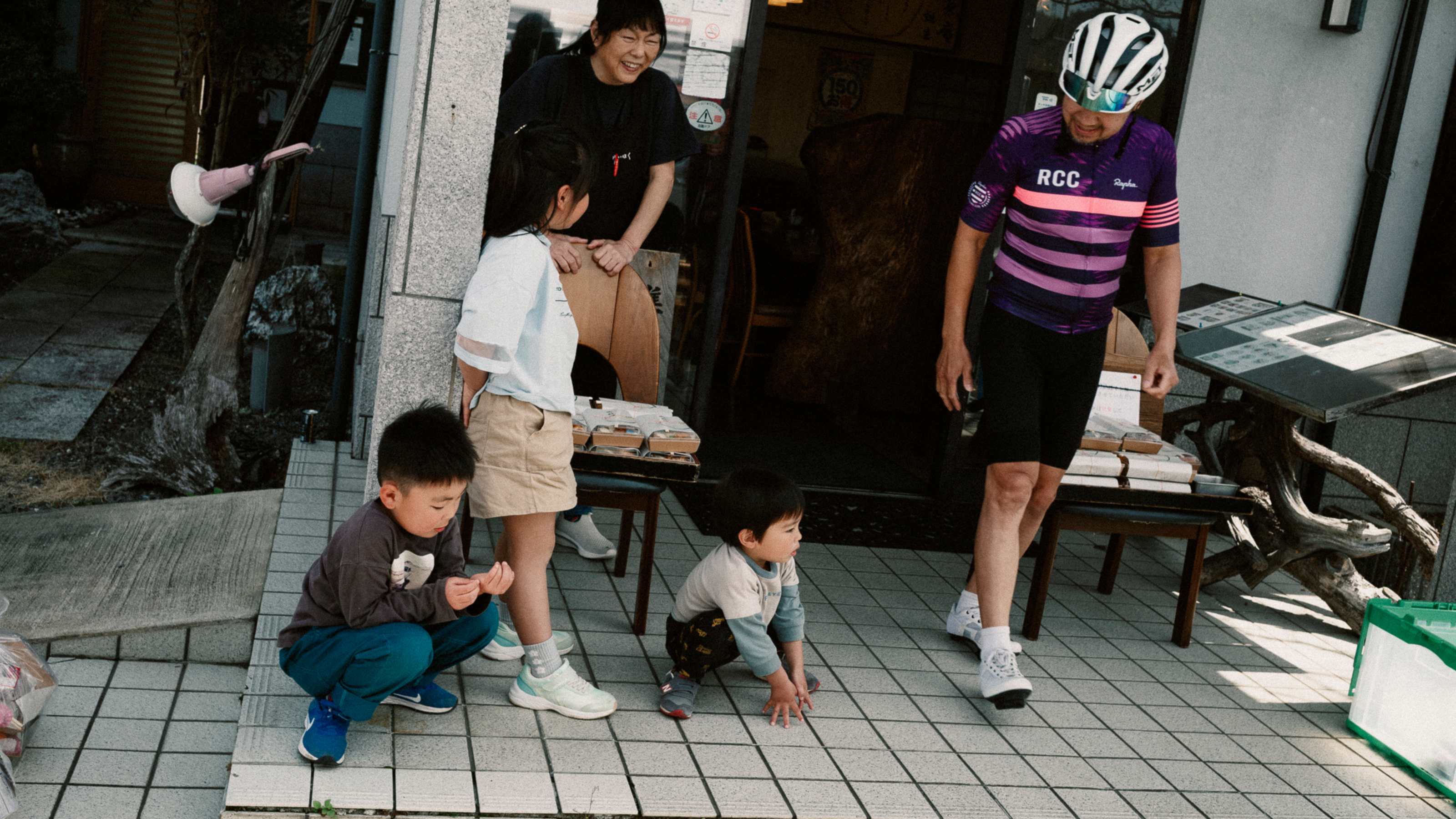
Japanese culture places great importance on etiquette. While foreigners are granted leeway in terms of following all the rules, it’s still important to try and respect the traditions and mores that you are aware of.
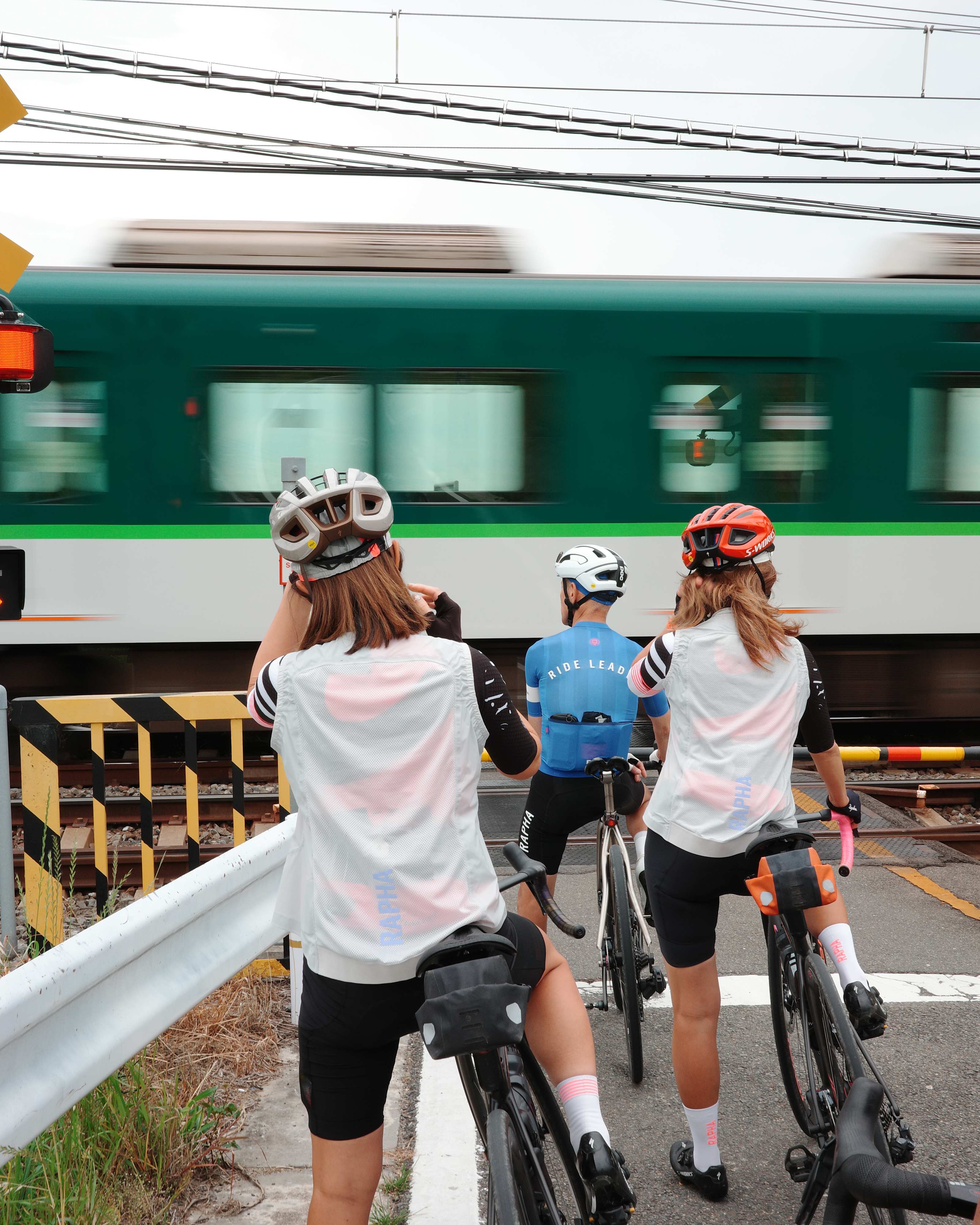
A good example is riding in areas where there may be pedestrians or other road users. Take your time, try to be quiet and respectful – even if at home you ride more assertively. Ringing a bell to alert pedestrians is not viewed as a polite signal that you are trying to get past, but as a loud and extremely rude gesture.
Riding rinko-style
Bicycles are not permitted on much of the high-speed rail network, at least not without being put into a bag and partially dismantled. Putting one’s bicycle into a bag is seen as respectful to the other users of the service.
Bags used for this purpose are called ‘rinko’ and riders at our Clubhouse in Tokyo refer to taking a train to escape the confines of central Tokyo, cycling for a few hours in the countryside and then returning again by train riding ‘rinko-style’.
If you plan on moving around the country with your bike, investing in a rinko is essential.
Kyoto
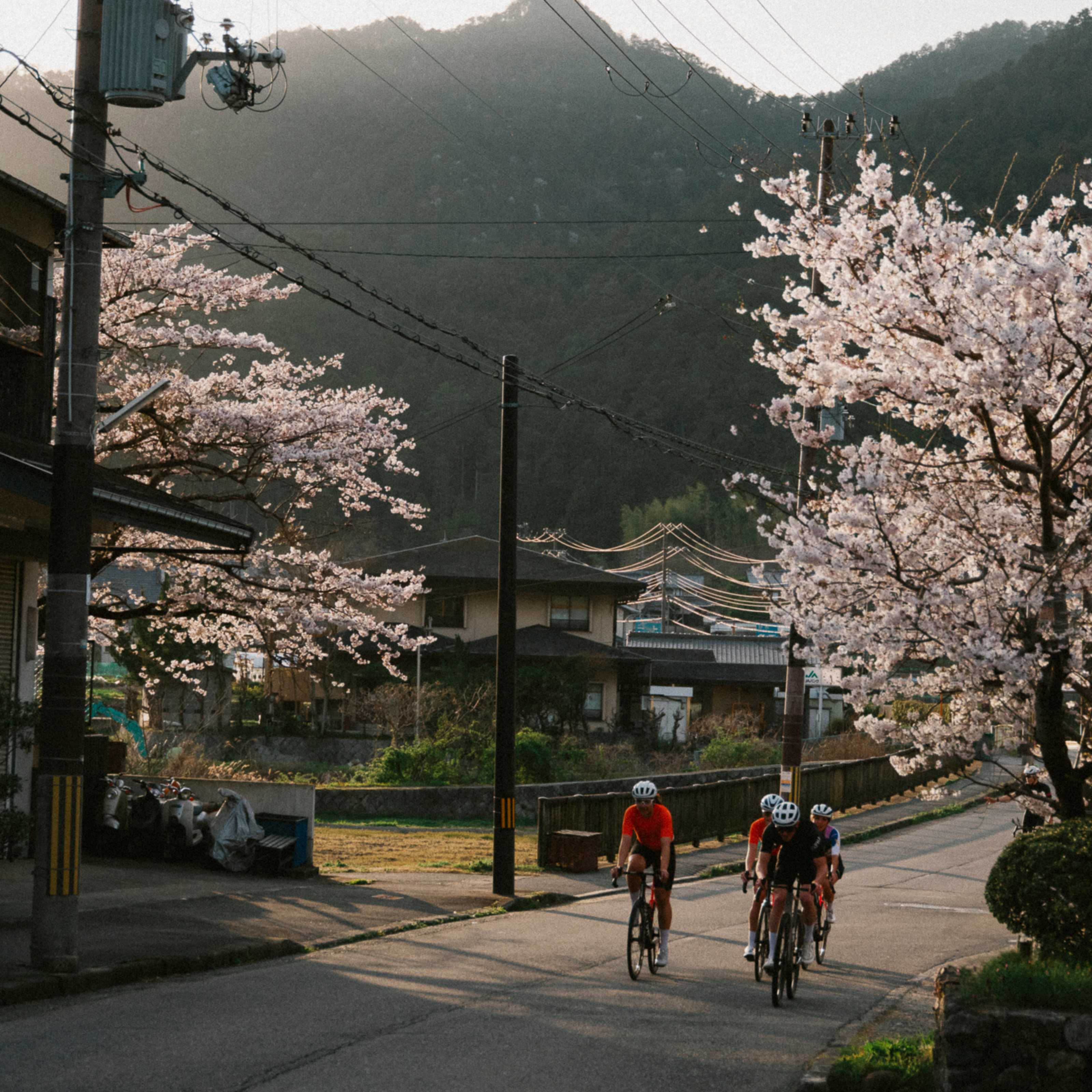
The original capital city of feudal Japan, few cities in the world can rival Kyoto for its combination of heritage and contemporary influence. Kyoto was chosen as the host city for the Rapha Cycling Club Summit 2025, with more than 130XX members joining together to explore the city and the beautiful countryside beyond.
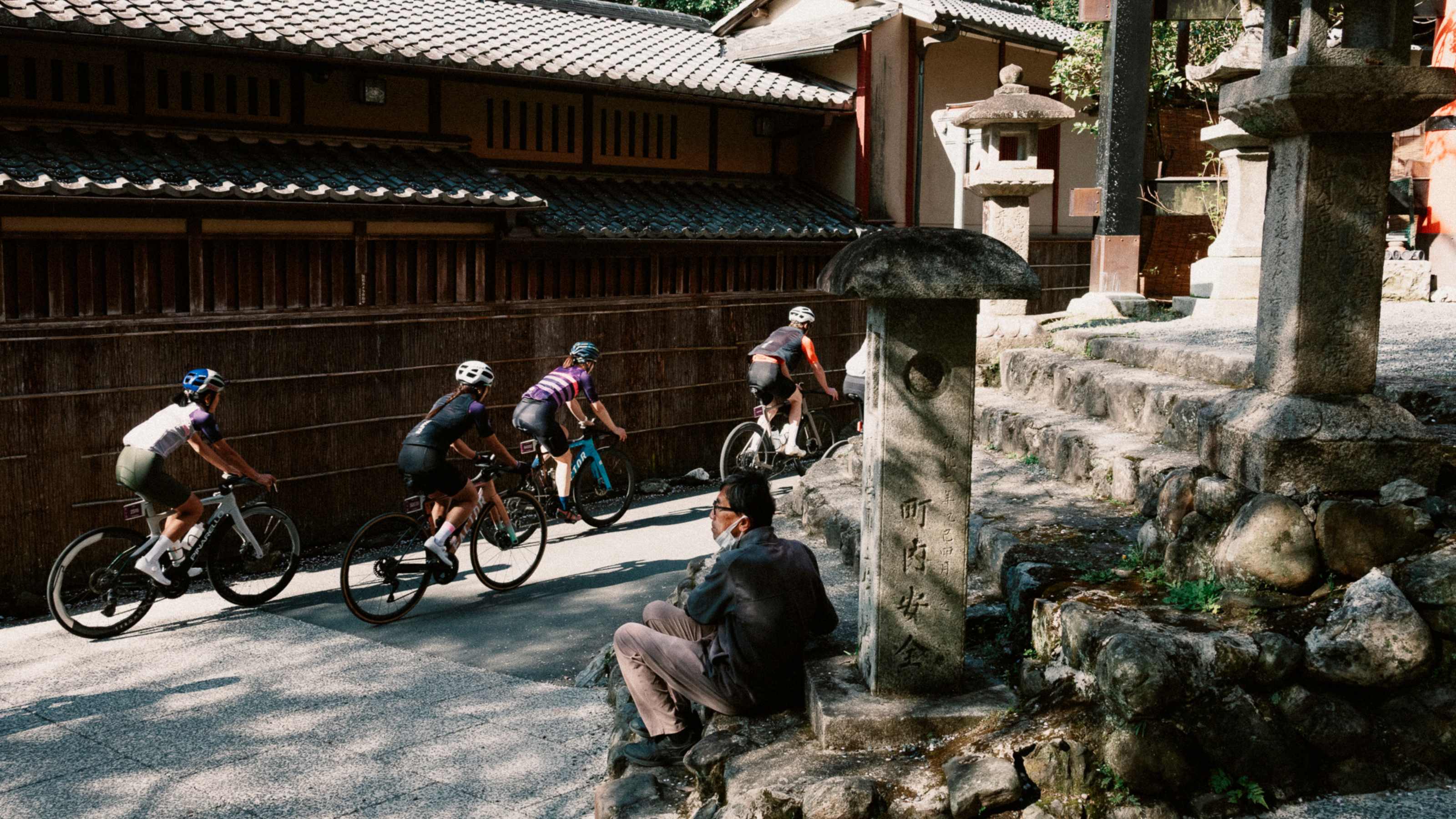
There is a tranquility and timelessness in Kyoto, with quiet narrow streets, Zen gardens and Shintō shrines among more modern constructions. A cradle for artistic, philosophical and religious development, the poetry and literature of Kyoto has had a global impact with names like Bashō, Ihara Saikaku, Yasunari Kawabata, and Haruki Murakami all linked to the city.
Shintō – Japan’s indigenous religion or custom – has a deep focus on the worship of nature and mountains, and Kyoto is admired for its proximity to the natural world. From the peaks of Mount Hiei to the east of the city, to Mount Atago in the west; from most parts of the city, one can see the forested mountains and rolling hills that hem it in.
A subgroup of Japanese practices related to Esoteric Buddhism is Shugendō, pursuing spiritual enlightenment in the mountains. Shugendō translates to ‘the path to power through training and discipline’, a concept that will feel familiar to any dedicated cyclist. Mountains, can provide us with spiritual invigoration, no matter how much we might suffer.
Ride Mount Atago
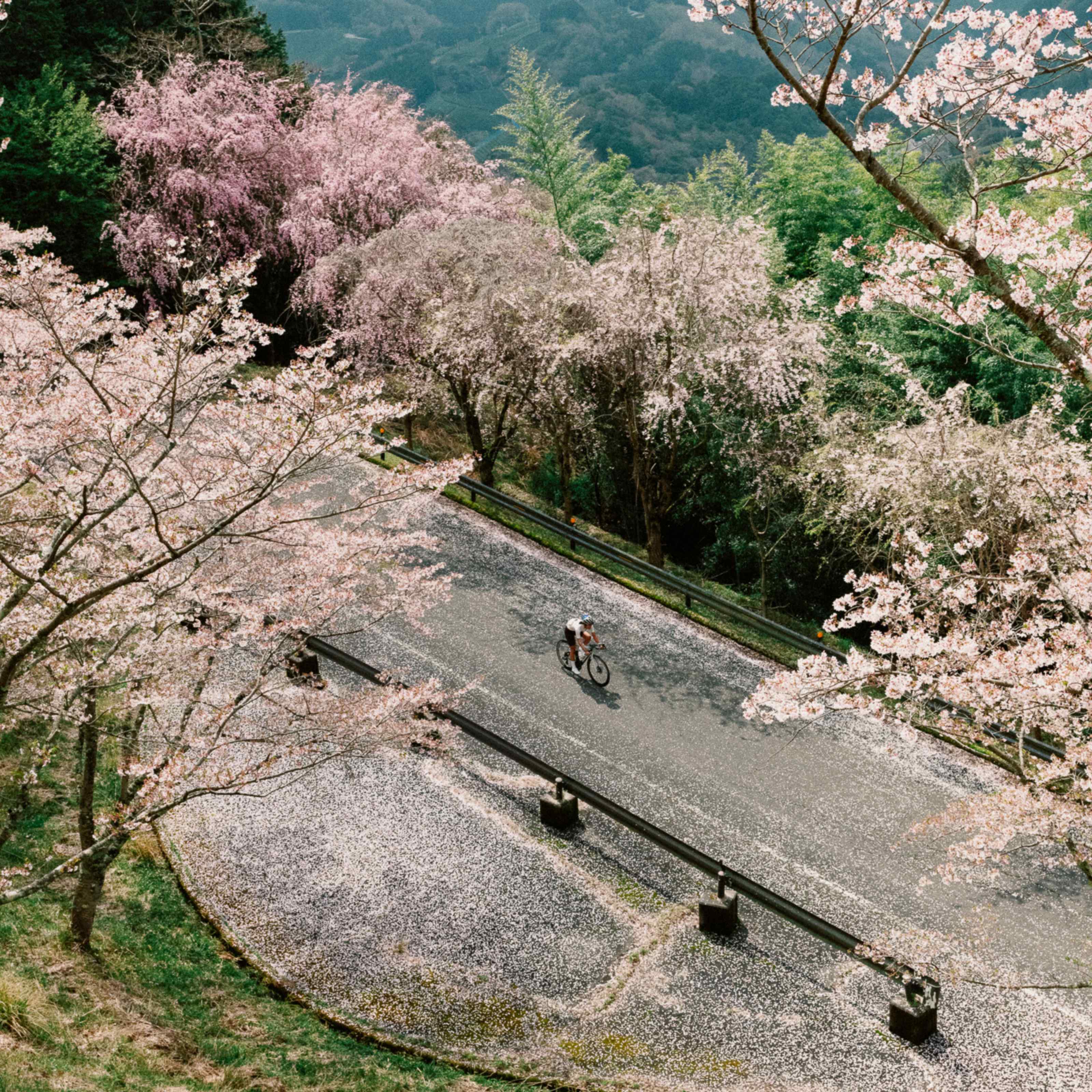
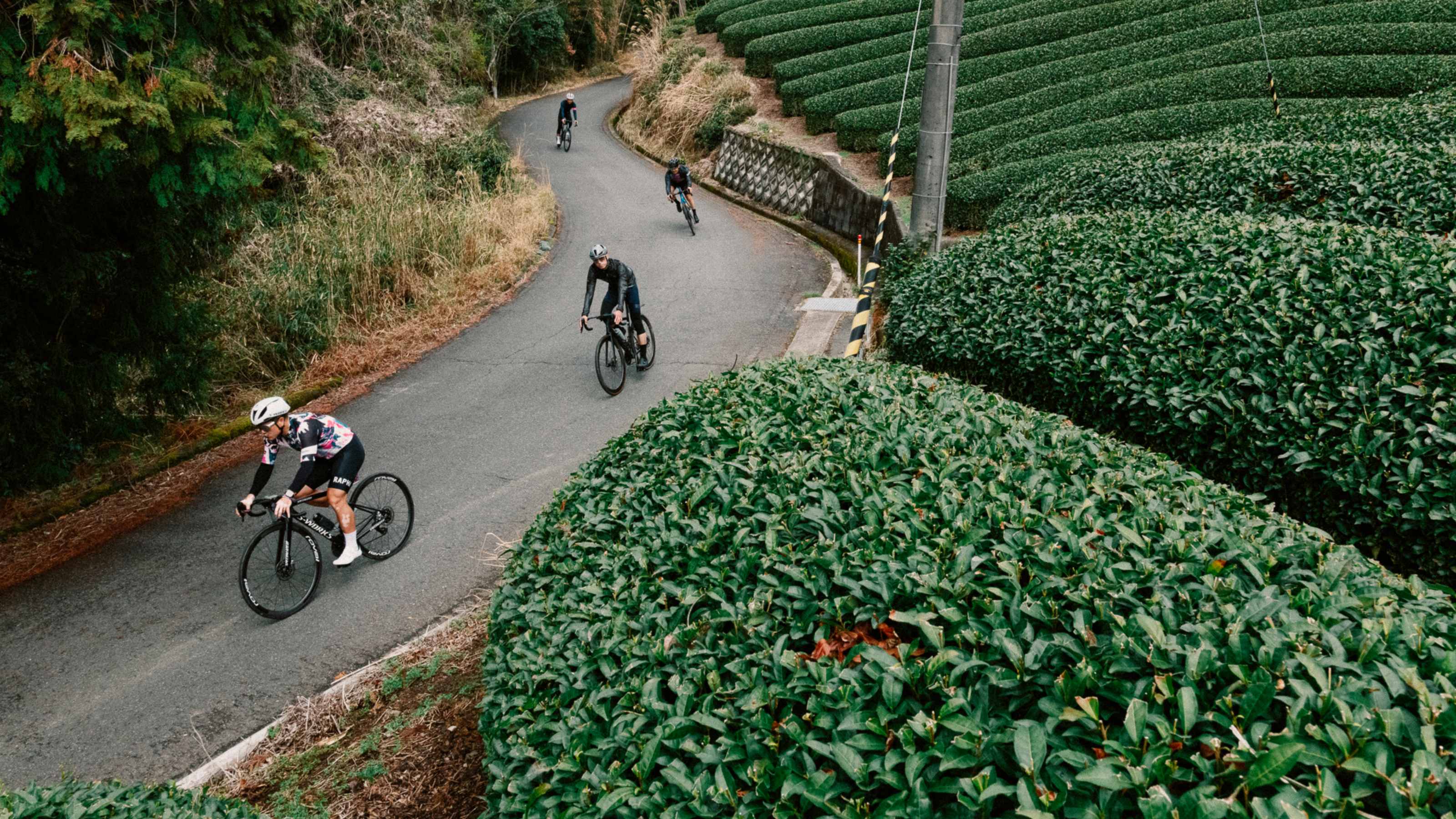
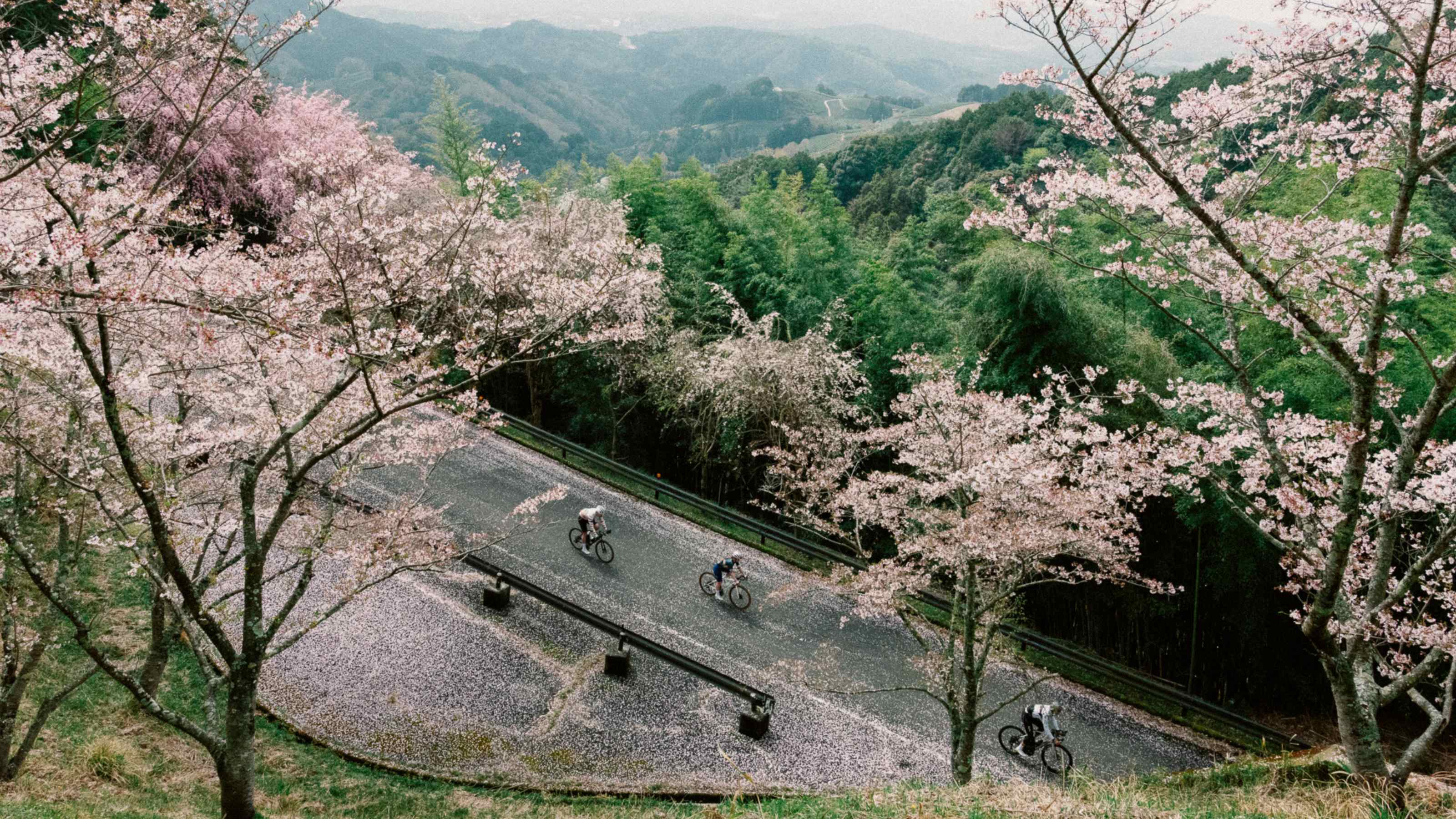
The queen stage of our RCC Summit saw riders take on the climb of Mt Atago north-west of Kyoto – and while there are many amazing routes you can tackle from Kyoto, this one takes some beating.
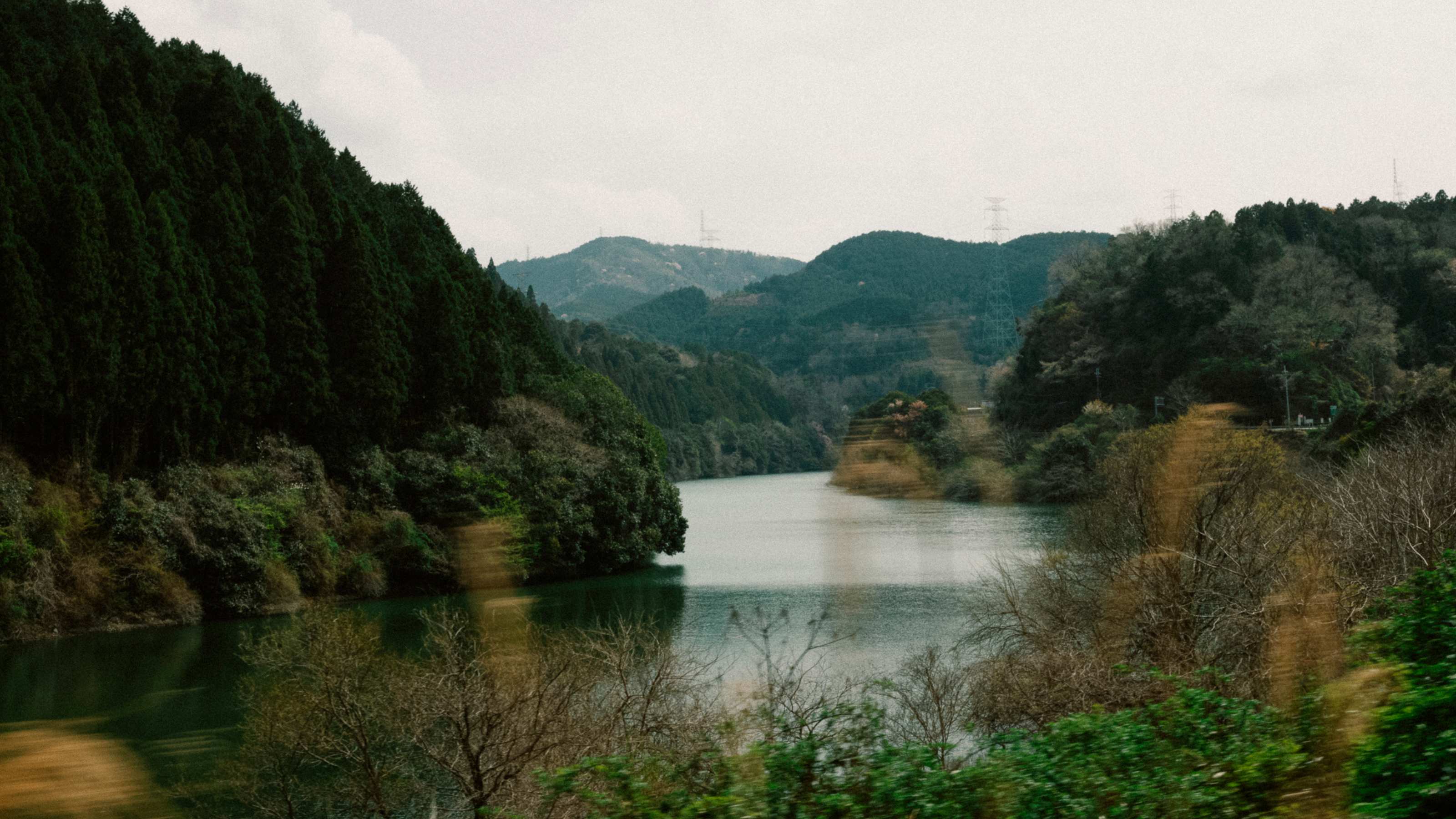
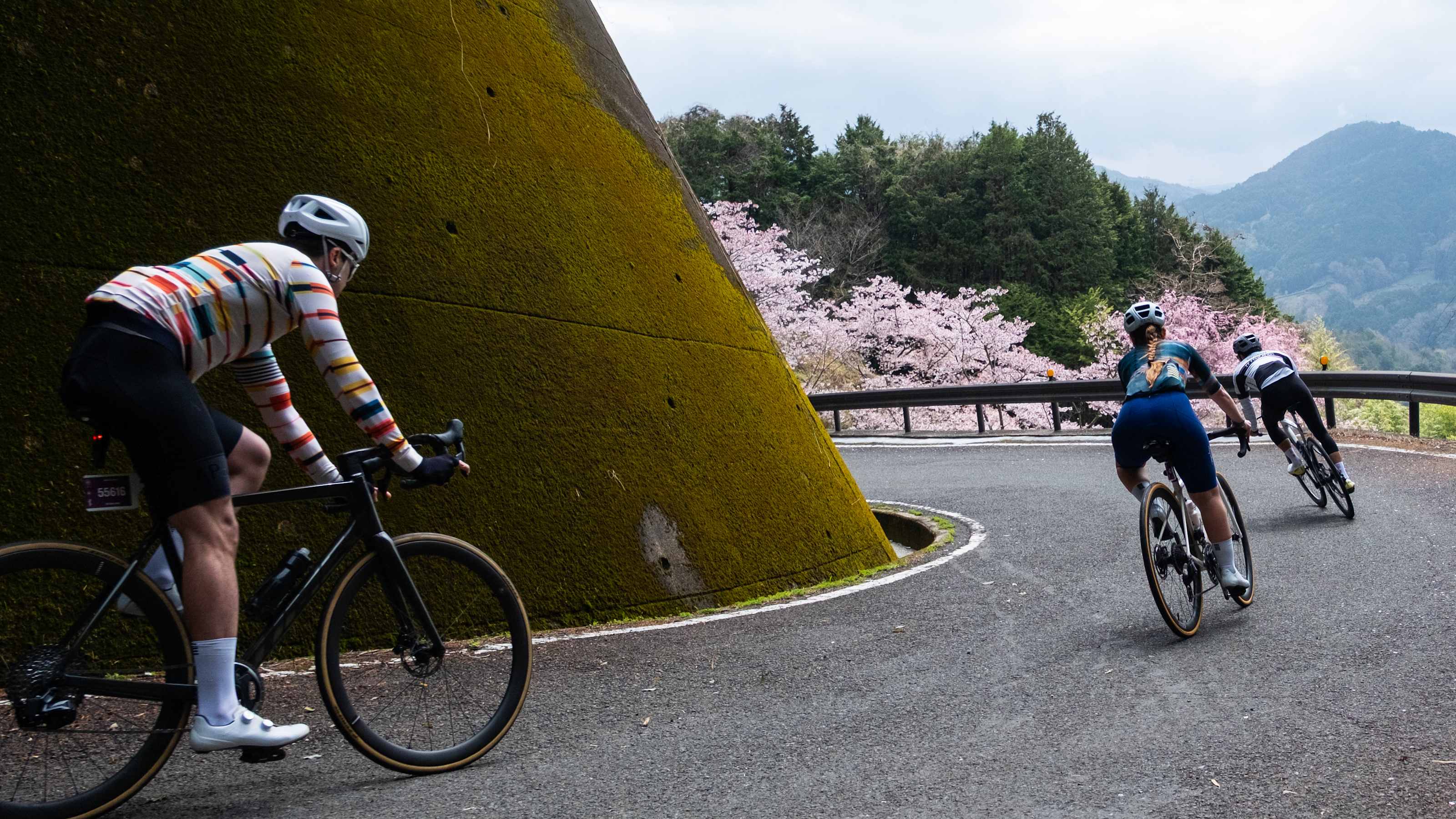
Head out of the city via the historic Arashiyama district, with its famous bamboo grove, narrow streets and ancient temples. Pass beneath a Tori gate and the climb begins with a steep hump and a technical descent of nine 180º switchbacks. This brings you to the start of a steady nine kilometres of winding forest road, gaining an astonishing 600m amongst the cedars and yuzu trees. Loop around Amawaka Lake and then just two passes remain between you and Kyoto: the Kurio pass, blissfully silent as it is closed to traffic, and the heavily forested Kyomi pass, which opens up into a beautiful view of the city as you descend.
The Japanese Alps & Nikko Mountains
Criss-crossing mighty Honshu, the so-called Japanese Alps are a set of interlinked mountain ranges. They were given their European moniker by an Englishman, the archaeologist William Gowland, but their spiritual and social significance long predates his arrival (or that of any European parvenu).
In Shintoism, Mount Tate (Tateyama) is one of Japan’s three Holy Mountains (alongside Fuji and Haku).
The Nikko mountains are not part of the Japanese Alps, but between these two you’ll find most of Japan’s most challenging passes – including its highest paved road, Mount Norikura.
Cycling up Mt Norikura, Japan’s highest road, from Matsumoto
For as long as there are bicycles, there will always be some cyclists who want to ride the biggest mountain they can find. In Japan, that mountain is Mt Norikura.
From the small city of Matsumoto in Nagano Prefecture, head west along the banks of the Azusa river. While the way tracks gradually uphill for this early part, it really serves as a warm-up for the climb itself. Once you get onto the lower slopes of the ascent, it’s 50 kilometres of climbing to a dizzying 2,702m above sea level.
The last 13km are closed to motor traffic, allowing you to lock in and grind out the climb.
Climbing the sweeping turns of Irohazaka from Nikko
Two hours north of Tokyo, Irohazaka is a world-famous road (or, more properly, a pair of twinned roads) that join the town of Nikko with the picturesque mountain Lake Chuzenji via 48 amazing switchbacks. In terms of cycling, Nikko to the summit at Chuzenji is one of Japan’s defining road rides.
The road – and the area more generally – is celebrated as a place to view the autumn changing of the leaves (known as ‘koyo’), which can make it very busy at the end of summer. In 40 kilometres (and more than 900m of elevation) you can climb from metropolitan Nikko, up to the shores of the lake and then swoop back down into town.
If you feel like making a blockbuster day of it, you might also push onward into the Nikko mountains. Heading north from Nikko’s outer environs over the Maruyama pass then returning southward via the Sanno Pass, completing the route on the downward part of the Irohazaka. Be warned though, this loop is almost 100km with around 2,500m of elevation gain.
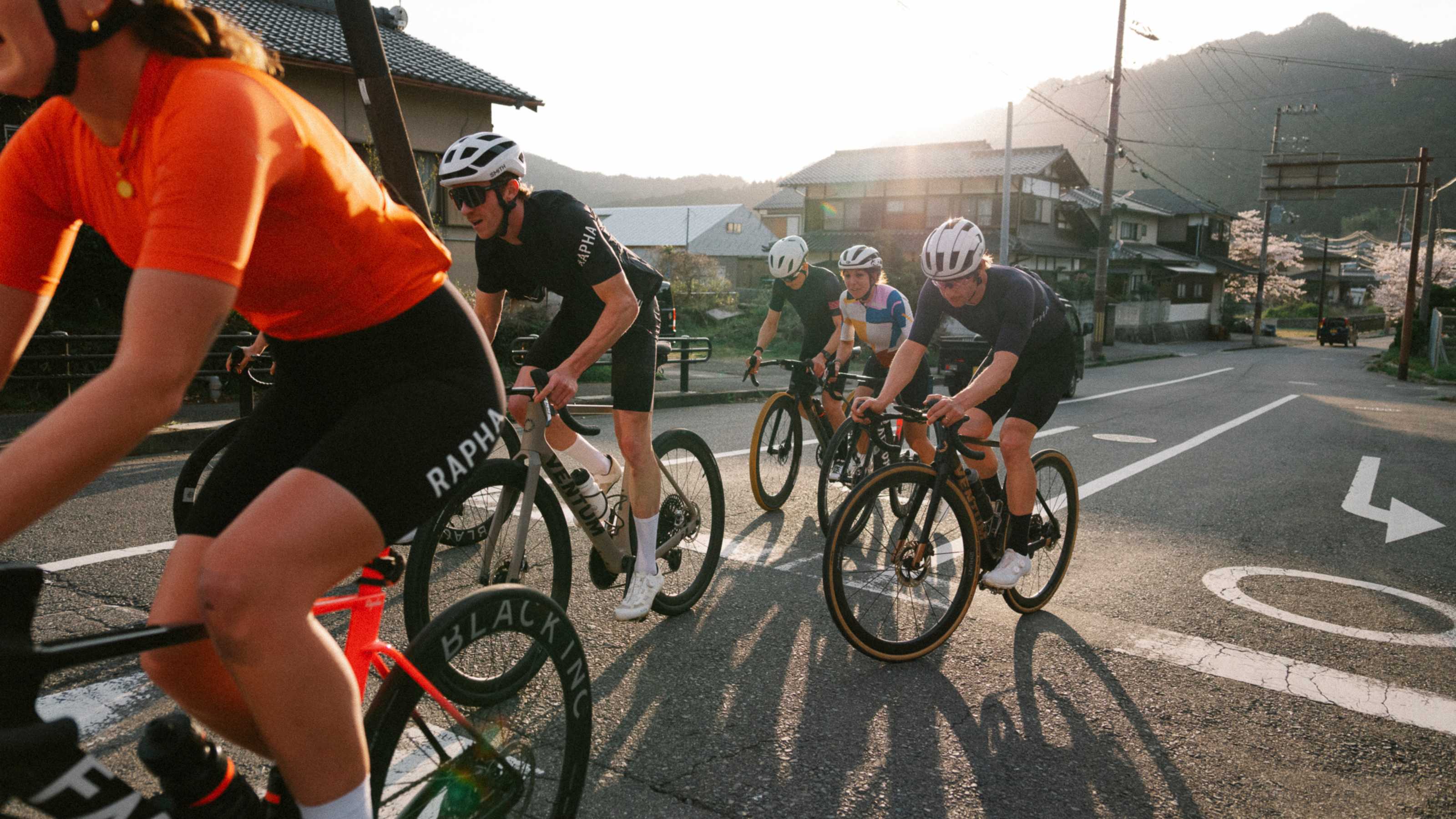
Mt Fuji and Fuji Five Lakes
Mt Fuji is, of course, the world-renowned tallest peak in Japan. It towers over the landscape and can be seen from hundreds of kilometres away, appearing almost otherworldly, so vast is its presence. The Fuji Five Lakes are a series of bodies of water that run along its northern foothills and they give their names to a more general area of scenic beauty.
Cycling Mt Fuji itself is possible, although none of the roads go all the way to its summit. The roads were built mostly for getting tourists and skiers up toward the top – and while there are plenty of switchbacks and lofty views, there are also plenty of fast-moving buses and other vehicles. Most cyclists who have done both say they preferred riding somewhere with a view of Fuji, rather than a view from Fuji.
The Subaru Line (also known as the Fujiyoshida Route) is the most popular way up.
A circuit of Lake Kawaguchiko and Lake Yamanaka
A real hotspot for cyclists visiting the country, and for local riders too, Kawaguchiko is a hugely popular destination thanks in large part to its amazing views of Mt Fuji. The loop of the lake itself is around 17 kilometres, but many people choose to cut off the eastern end and cross the centre of the Lake on the Kawaguchiko Ohashi road bridge.
Be warned, the popularity of Kawaguchiko transcends cycling and you will find yourself sharing the road with riders of a wide array of different abilities and experience levels. E-bike rentals do a roaring trade, with many folks arriving here on the train for a day trip.
Sitting slightly apart from the other five lakes, Yamanaka is a more peaceful setting than busy Kawaguchiko. There is a segregated bike lane around almost the entire lake – although it does merge onto the circular road at some points. A peaceful, serene circuit with views of Fuji similar to those of Kawaguchiko. Combining both Kawaguchiko and Yamanaka into one ride is roughly 55 kilometres.
If you’re looking to make a proper ride of it and break free from the crowds, you could also extend your itinerary to take in Lakes Sai, Shōji and Motosu. The full distance if you circuit all five is 100km with 1,250m of climbing.
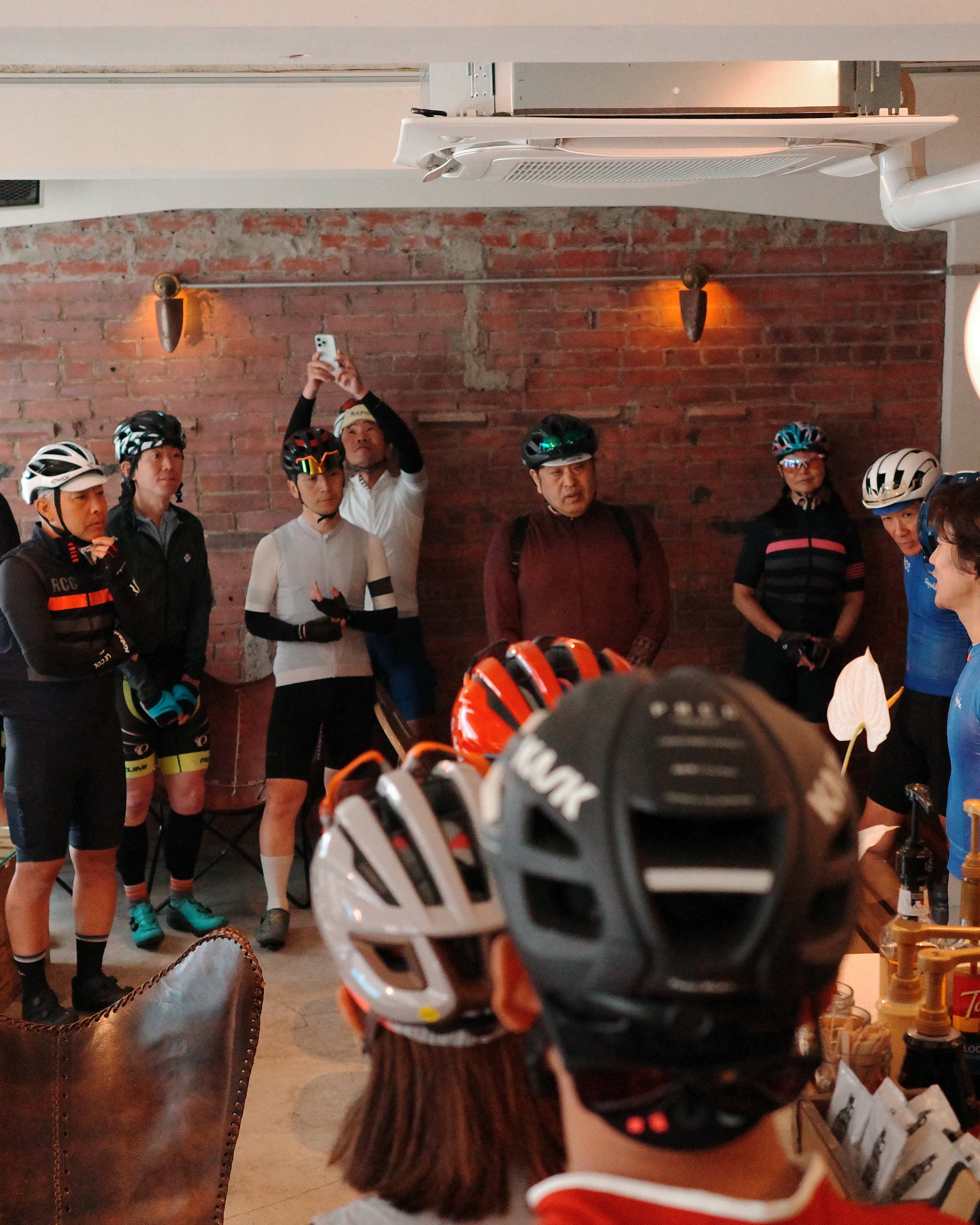
Tokyo
What is there to say about Tokyo that has not already been said, or which we haven’t absorbed via its unparalleled presence in popular culture? Aside from being one of the world’s largest cities, a living, breathing behemoth whose scale is hard to comprehend, Tokyo is also Rapha’s home in Japan. Our Clubhouse in Jingumae is the centre of a lively community with rides both formal and informal going out every day. If you do plan on visiting Japan, remember that RCC members can make use of the Club’s fleet of Factor MONZA rental bikes to avoid the stress of flying with their own bike.
READ MORE STORIES
See what's new this season to get yourself out there.
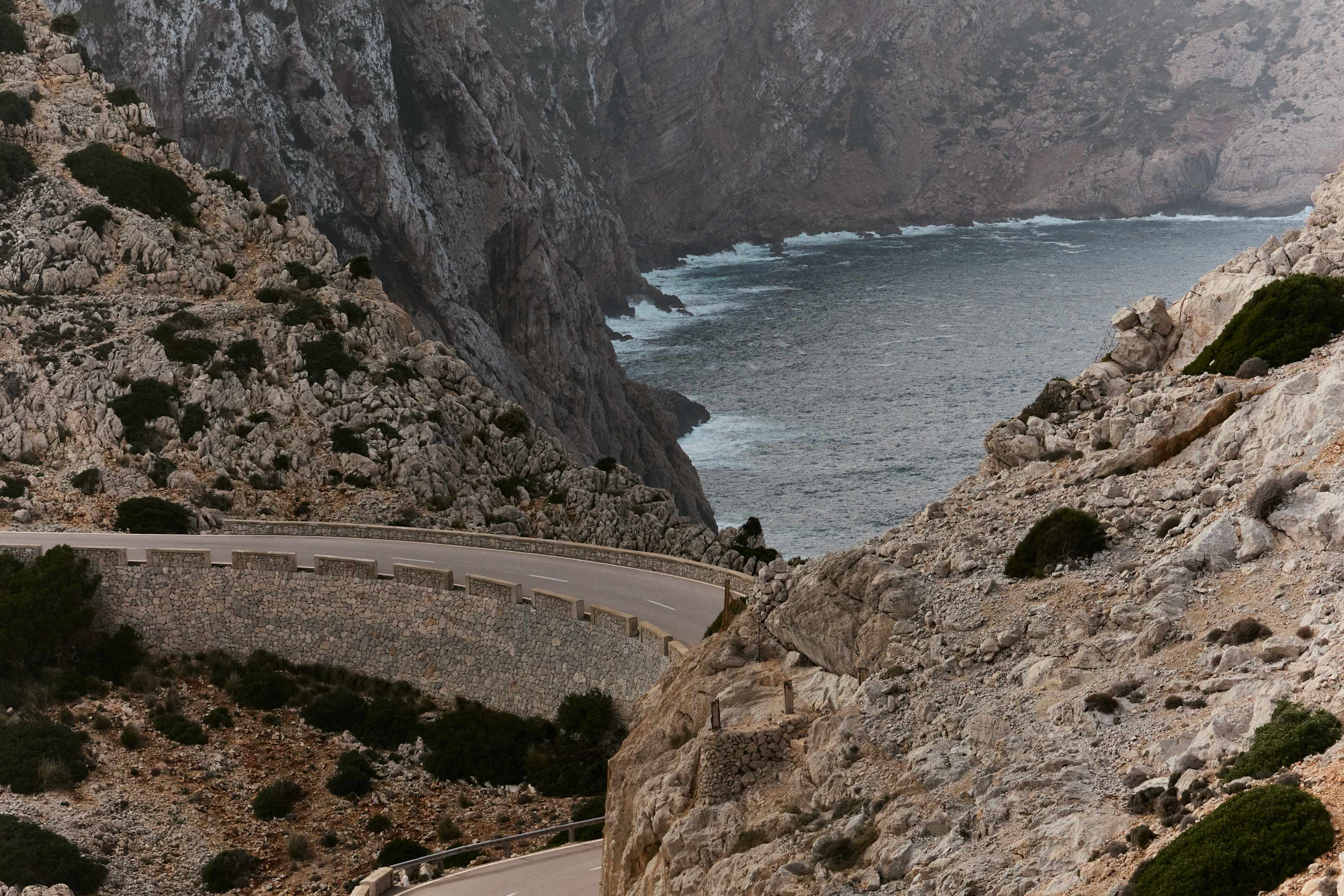
Sa Roqueta: A Rapha Guide to Mallorca
Everything you need to know about Europe's finest training destination.
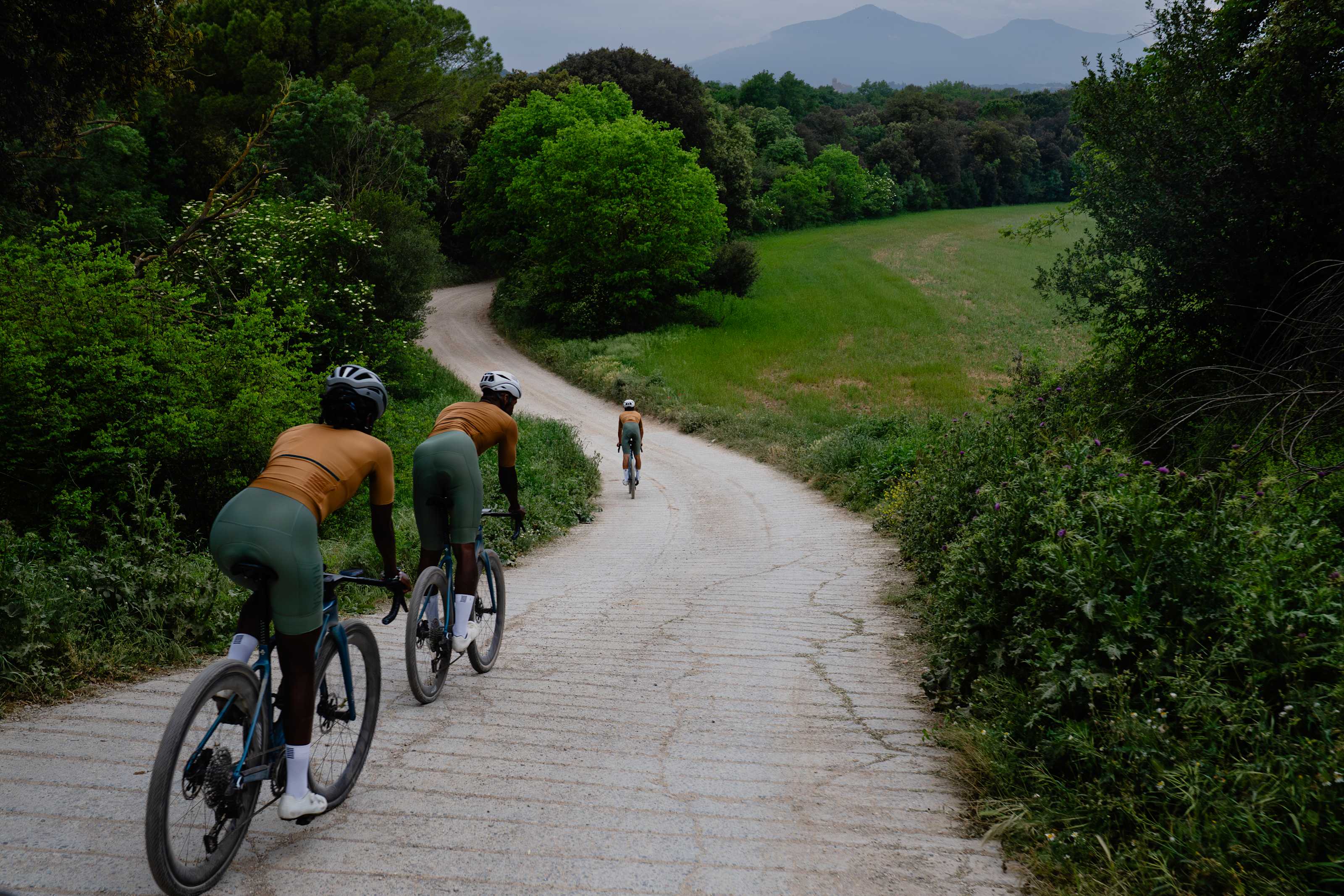

PRO TEAM GUIDE
The complete system built to carry you to the limit. Sharpened at the highest levels of the sport to make sure you find your edge.