RCC Factor Monza Fit Guide
At Factor, we believe racing is for everyone who has the drive to compete. The MONZA carries this racing pedigree forward in a refined, streamlined package. This is not an entry-level bike, it’s a purebred race machine, tuned for those who train, race, and push their limits daily. All Factor bikes are developed to be fast, to be raced, and to be on the cutting edge of technology. Designed to accommodate the needs of the cyclists who work hard and play hard, high performance non-negotiables like WorldTour level handling, aerodynamics, and stiffness live side-by-side with practical features like in-frame storage and sleek light and radar mounting solutions.
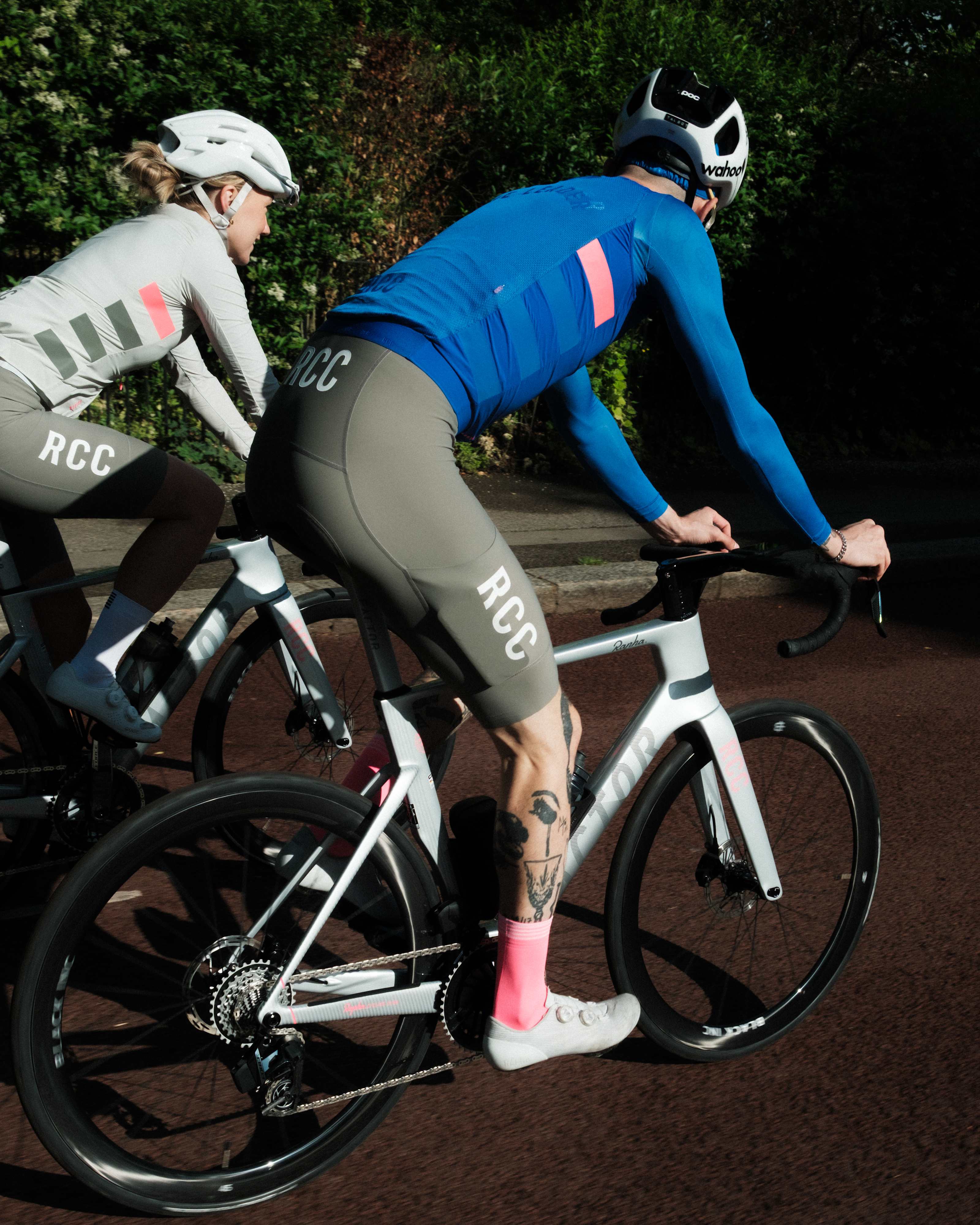
Adaptive Fit
In the ever-evolving world of bike fit philosophy, non-pro racers are often caught in the crosshairs of having to follow what the pros are doing if they want to ride top-end bikes. With the MONZA, we offer WorldTour-level performance combined with a fit philosophy that will accommodate riders who still demand the most out of their materials but perhaps don’t have the flexibility to settle comfortably on an OSTRO VAM. The MONZA has been designed to provide a responsive ride that can accommodate an aggressive setup while still being suitable for athletes who may not have extensive flexibility.
With the MONZA, riders can find their ideal position without the need of spacers thanks to a modest increase in stack height compared to the OSTRO VAM. They can settle into an appropriately aggressive set-up and still enjoy the long distance comfort provided by the democratic fit.
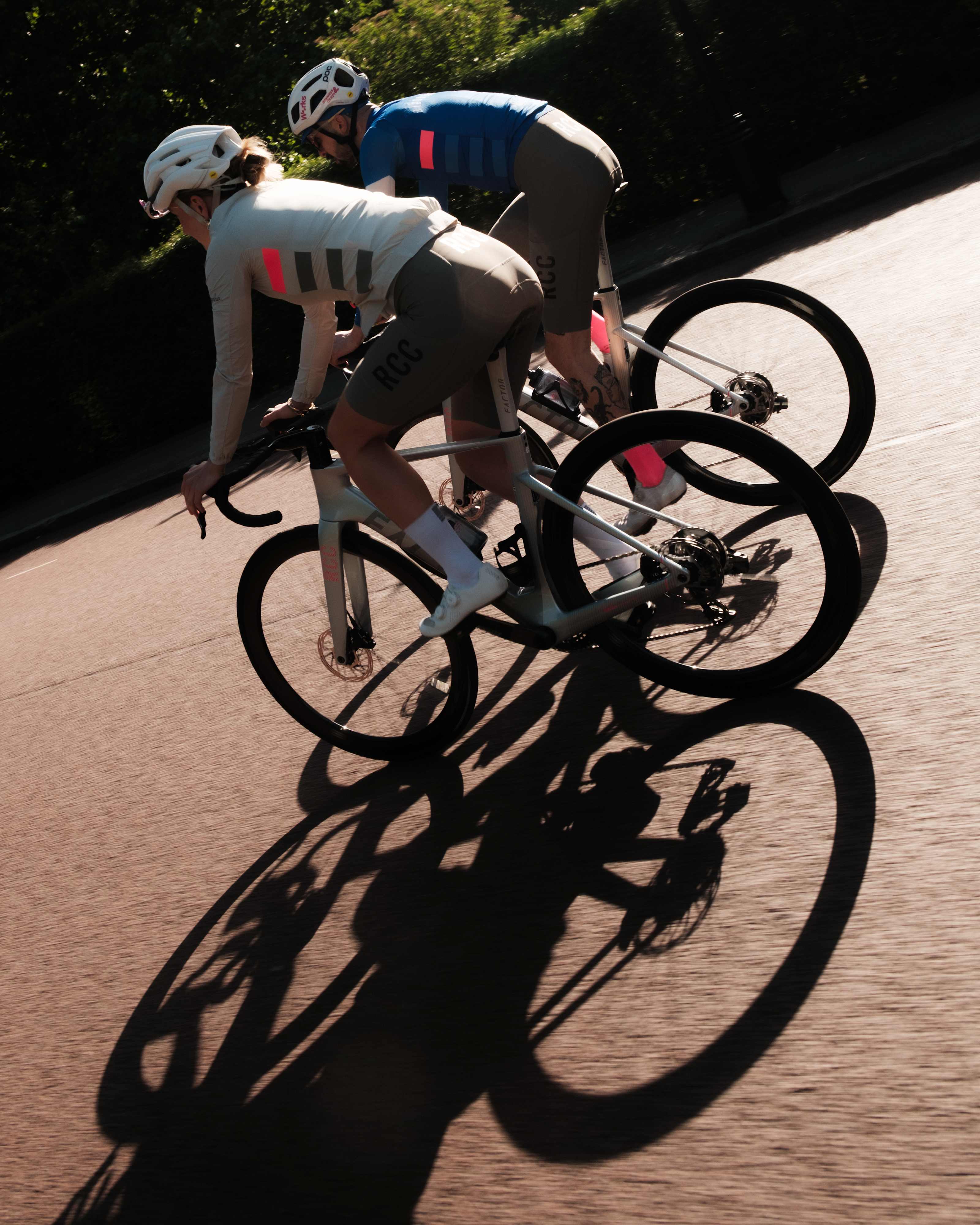
Study the Geometry Chart
First indicators that will give you a good idea of whether a certain size will fit your riding style, are the reach and stack. These are the two measurements that are standard starting points for all modern bikes and a way initially to compare fits.
Reach is the horizontal distance from the middle of the bottom bracket to the midpoint of the top of the head tube. The stack is the vertical distance from the middle of the bottom bracket to the midpoint of the top of the head tube.
The seat tube angle impacts the reach and necessarily affects the cockpit length as well. A steeper seat tube angle places the rider further forward, requiring a shorter cockpit length to achieve the desired reach. Another consideration impacting reach is the length of the hoods, which have recently tended to be much longer than in previous component generations. Introduced in conjunction with the Factor MONZA, the Black Inc Integrated Barstem HB04 complements the MONZA’s sizing philosophy which emphasises a more democratic fit, including reducing the required reach. This design marries well with modern Shimano and SRAM hoods, by offsetting their inherently longer reach.
Fit Geometry vs Handling Geometry
It’s important to understand that at Factor, we often discuss a bike's fit geometry and handling geometry separately. Though the MONZA may fit differently according to athletes’ shapes, it is specifically designed to handle quintessentially like a Factor. This doesn't mean that the handling geometry is exactly the same, but it means we've fine-tuned the geo numbers symbiotically with the riding position to yield a desired "feel".
Once you have established that a bike will fit you and your riding style well, the next number to look at is the head tube angle. Measured using a virtual line running down the center of the fork steerer tube, it is essentially the angle between the fork and the ground. The head tube angle is a good indicator of how the bike will handle, but it is not the entire picture.
Typically, the steeper head tube angle will be more responsive handling while slacker angles will feel more stable and slower to respond. It takes fractions of degrees of difference to make a big impact on the way the bike will handle.
However, head tube angle is just part of that story. Trail is another important measurement that can help you determine how a bike will handle. Trail is a function of the head tube angle and offset, a ratio that when properly understood allows you consistently to understand how a bike will handle. Trail is the distance between where the tire hits the ground and the point where the measured line through the center of the head tube would hit the ground. And the rake or offset is the distance between the front wheel’s axle and steering axis, which is a line drawn through the center of the head tube to the ground.
A low trail value indicates agility and quick maneuverability, while a larger trail tends to offer more straight line stability, but too much makes a bike sluggish and slow. Factor designers are very purposeful about the choices made that will affect the handling of our bikes. We make bikes for racers of all levels, and our bikes handle accordingly. No Factor bike has sluggish or slow handling.
Another factor to consider when looking at the trail is tyre size. Larger tyres effectively change the distance from the hub center to the ground, lengthening the trail value. The MONZA’s handling was calibrated to be quick and agile, accommodating the larger tyres required by most athletes. When you are studying the geometry charts, you might notice that the trail on the MONZA and OSTRO VAM is identical as is the head tube angle. The bikes have been designed to handle exactly the same.
For racing bikes, you will typically find steeper head tube angles, bigger rake and shorter trail because the aim will be to have snappy, responsive handling. That’s usually what we are talking about when we write “aggressive handling”. Keep in mind, though, that things like stem length, tyre size, and even handlebar width and reach will impact how the bike handles.
The other important angle measurement for any frame is the seat tube angle. The angle of the seat tube relative to the ground, the seat tube angle impacts where the rider’s position on the bike, and is a major consideration when looking at bike fit. Here again the MONZA and OSTRO VAM share the exact same seat tube angle across all sizes, indicating that they should share handling characteristics.
Similarly, chainstay length and wheelbase will help give you an idea of how responsive the frame should be: shorter chainstays will indicate a snappier ride while longer chainstays and, consequently, wheelbase should point to a very stable bike especially on descents, though it might feel slow in handling.
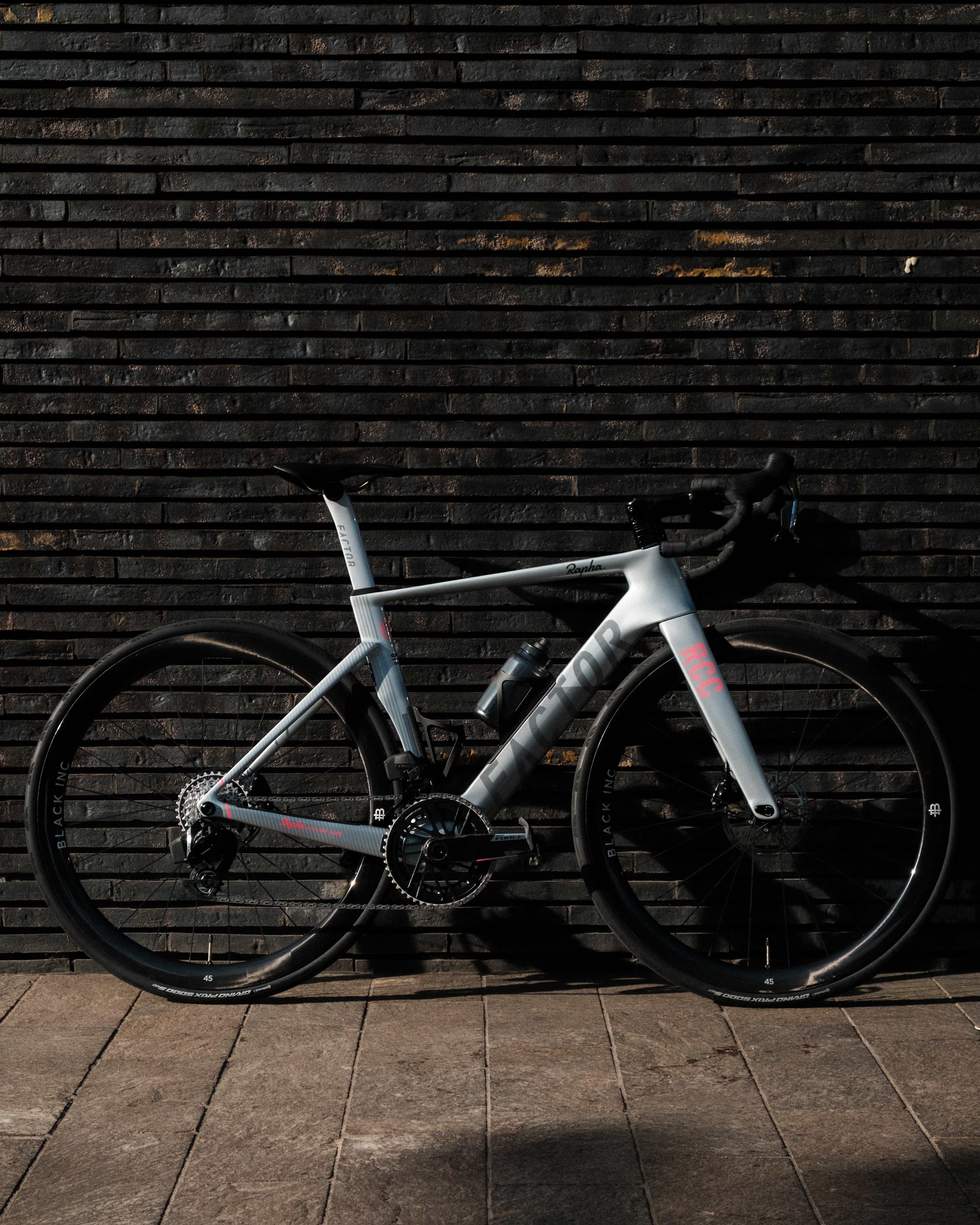
Where the MONZA sits
As with every bike we design, our team of engineers and designers has painstakingly balanced all the metrics to provide the ideal position for the rider on a Factor. It’s what makes our bikes feel undeniably like a Factor. Consequently, we have purposefully designed the MONZA to offer a race-ready, responsive ride while enhancing the comfort levels thanks not only to an expertly developed carbon lay-up, but the minimally increased stack height compared to the OSTRO VAM. Finding that balance makes the MONZA suitable for everything from Tuesday night crit series to a mountainous gran fondo.